USS Scorpion search
The Wisdom of CrowdsThe USS Scorpion search was a U.S. Navy effort to locate a submarine that disappeared in May 1968, and a demonstration that dispersed, partial judgments could yield a result no participant had independently envisioned. Naval officer John Craven replaced the apparent need to find a handful of all-knowing experts with a structured process: gather different kinds of knowledge, elicit independent estimates, and combine them. Five months after the disappearance, a Navy ship found the submarine 220 yards from the group’s estimate.
The search begins with uncertainty
In May 1968, the USS Scorpion disappeared while returning to Newport News after a tour of duty in the North Atlantic. The Navy knew the submarine’s last reported position, but not what had happened to it or how far it had traveled after its last radio contact. Its search area was a circle twenty miles wide and many thousands of feet deep—a vast space in which the wreck’s location could not be inferred from the known position alone.
The predicament seemed to call for a few leading specialists in submarines and ocean currents to choose where to search. Craven, a naval officer, instead devised a way to collect judgments from people with different relevant knowledge. The contrast between a difficult search and the modest pieces of information available to the searchers became central to the significance of the case: no individual held the complete answer, but their separate estimates could be combined.
Craven’s wager-based method
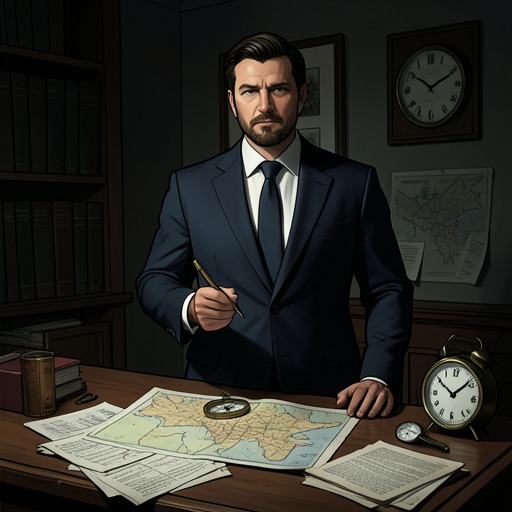
Craven first constructed a series of alternative scenarios explaining what might have happened to the submarine. He then assembled a team with varied expertise, including mathematicians, submarine specialists, and salvage men. Rather than having them deliberate together toward a consensus, he asked each participant to estimate the likelihood of each scenario independently.
The estimates took the form of wagers, with bottles of Chivas Regal offered as prizes. The team made bets on such questions as why the submarine had run into trouble, how fast it traveled toward the ocean bottom, and how steeply it descended. Each estimate concerned only one part of the larger problem; none, by itself, identified the final location.
Combining judgments into a location
Craven believed the separate answers could be assembled into a composite account of the submarine’s loss and used to estimate where it had come to rest. He combined the guesses through Bayes’s theorem, a method for calculating how new information changes prior expectations about the likelihood of an event. The result represented the group’s collective estimate of the submarine’s final position.
That position did not match a location any single member had selected. No participant had independently pictured the same answer that emerged from the combined information. The result was therefore not simply the judgment of the group’s smartest member or a compromise reached through discussion; it was a collective judgment produced by aggregating distinct estimates.
Confirmation and significance
Five months after the USS Scorpion disappeared, a Navy ship found it 220 yards from the location Craven’s group had identified. The search thus ended with an unusually precise confirmation: despite the enormous search area, the group’s estimate came within 220 yards of the wreck.
The underlying evidence had been sparse. No one in the group knew why the submarine sank, how fast it was traveling, or how steeply it fell to the ocean floor. Yet Craven’s method elicited estimates bearing on each of those unknowns and brought them together into a successful location estimate. The episode’s force lies in that gap between individual ignorance and collective accuracy: the group’s answer did not reside whole in any one person, but emerged from combining what its members could separately contribute.